Exclusive Access
Join our mailing list for Real Estate News, Events, Insights & Resources.


The term "ceiling height" is frequently used in commercial real estate. However, not everyone in the industry fully comprehends why this information is crucial for those seeking a new space to buy or rent, whether it's an office, a warehouse, or a coworking space. In this article, SiiLA SPOT will explain the meaning and significance of this concept.
Ceiling height refers to the distance from the floor to the ceiling in a given space. This measurement can vary depending on the type of property. Its importance lies primarily in its maneuverability and storage capacity within a property. Additionally, it's relevant because it's associated with spaces that offer adequate ventilation and temperature control, especially in warehouses and industrial facilities. Moreover, ceiling height enhances the quality of properties by allowing more spacious areas that add aesthetic and environmental value.
According to SiiLA Market Analytics, the average ceiling height for high-quality offices (such as Class A+ and A) in Mexico is approximately three meters. However, in warehouses and industrial facilities where ceiling height is more important, the average height in top-quality properties is equal to or greater than eight meters, while in lower-class properties (B and C), heights range from less than six to less than eight meters. An example of a Class A industrial building is Warehouse 6 at Vesta Park Guadalajara, which has a ceiling height of 12 meters. Such properties attract major commercial conglomerates like Amazon and Mercado Libre, which occupy similar warehouses in Vesta Park Guadalajara. Here, SiiLA presents the six main benefits of adequate ceiling height.
1.- Ventilation: Besides providing a more pleasant environment for employees and contributing to comfortable temperatures, spaces with high ceilings help prevent health problems related to dust accumulation.
2.- Design: In the case of offices and coworking spaces, a ceiling height equal to or greater than 2.8 meters adds sophistication and can facilitate natural lighting, thereby improving the overall appeal of a room.
3.- Shelving and organization: Pallets, commonly used for storing goods, are essential in warehouses. However, when ceiling height is limited, implementing an efficient shelving system becomes challenging, restricting future tenants' tools within the warehouse.
4.- Safety and access: Warehouses require employees to operate machinery and organize stored materials. Therefore, it is essential to consider the safety and mobility of the workforce. A high ceiling height provides more space and ensures safer environmental movement.
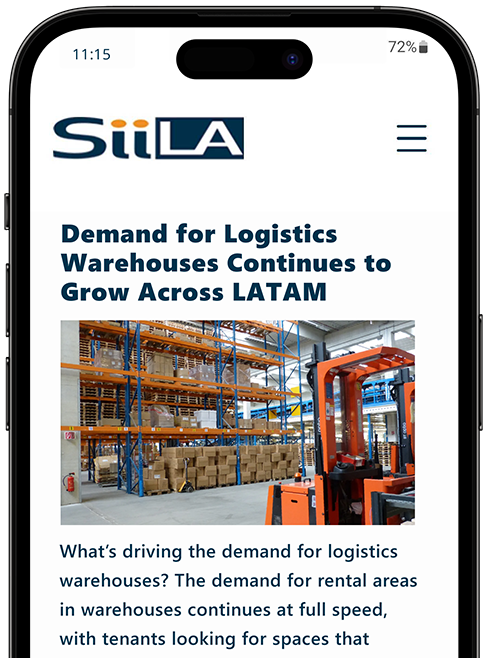
5.- Forklifts: Forklifts are standard in almost all warehouses, so it is crucial to consider their functionality within the space. They help handle products at higher heights and facilitate internal transportation within the warehouse.
6.- Storage capacity: Warehouses rely on efficient storage to fulfill their logistics functions. Therefore, it is crucial for a location to have a ceiling height between 10 and 12 meters, allowing the storage of a greater quantity of products in a smaller space. Ceiling height is also directly related to the property's floor load-bearing capacity, with higher-quality properties usually able to support loads between five and seven tons per square meter.
Now you understand what ceiling height is and why it is important. When marketing a property, remember to mention this and other property characteristics. This way, future tenants will be able to make more informed decisions and make the most of the space and functionality of the property. For more information about properties, their characteristics, and key players in Mexico's commercial real estate market, visit SiiLA SPOT or contact us at spot@siila.com.mx.





Join our mailing list for Real Estate News, Events, Insights & Resources.